Education in Ireland fair happening in Pune on 29th September 2024 • Applications for September 2025 intake for Trinity College Dublin, Dublin CIty University and University of Galway are commencing from 1st October 2024 • University College Cork’s applications are commencing from 14th October 2024 •
Trinity College Dublin vs DCU: Which Is Better for Tech and Business Masters?
September 15, 2026
6
min read
Trinity College Dublin vs DCU for tech and business masters: compare courses, fees, rankings, careers and choose the university that fits your study goals.
Choosing the right university for a master’s in Ireland can be difficult, especially when you are comparing two well-known universities in Dublin. Trinity College Dublin and Dublin City University are both popular choices for international students, particularly for technology, computing and business.
Trinity has a long academic history and a strong international reputation, while DCU places considerable emphasis on applied learning and industry-relevant skills. Here is a closer look at what each university offers.
Trinity College Dublin
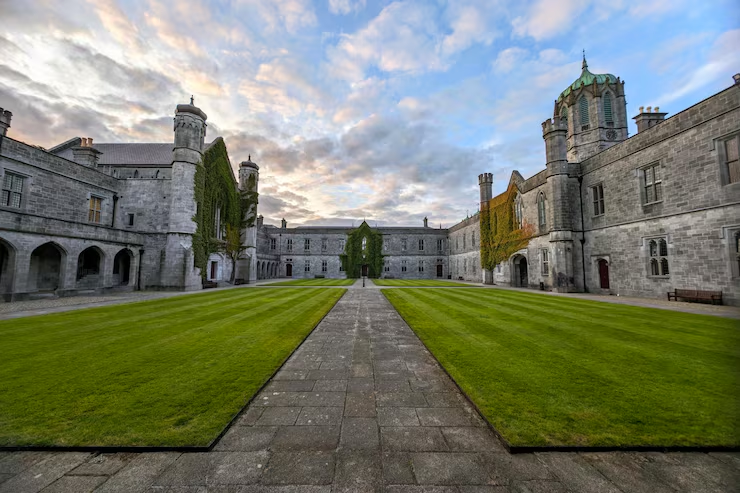
Founded in 1592, Trinity College Dublin is Ireland’s oldest university and one of the country’s most internationally recognised institutions. It offers a wide range of postgraduate programmes across technology, business, science and other disciplines.
For technology students, Trinity’s School of Computer Science and Statistics offers postgraduate programmes in areas such as Computer Science and Data Science. Some relevant programmes include:
MSc Computer Science
MSc Computer Science: Data Science
MSc Computer Science: Intelligent Systems
MSc Computer Science: Future Networked Systems
Students interested in business can choose from programmes covering management, finance, marketing, business analytics and other areas. Some options include:
MSc Management
MSc Finance
MSc Marketing
MSc Business Analytics and AI for Management
MSc International Management
MSc Operations and Supply Chain Management
Trinity is ranked 75th in the QS World University Rankings 2026. Trinity Business School also holds AACSB, AMBA and EQUIS accreditation, giving it the internationally recognised “triple crown” of business school accreditations.
Tuition fees at Trinity vary depending on the programme, so students should check the fee listed for their specific course before applying. The university's official 2026/27 postgraduate fee table provides the current programme-wise fees.
Dublin City University
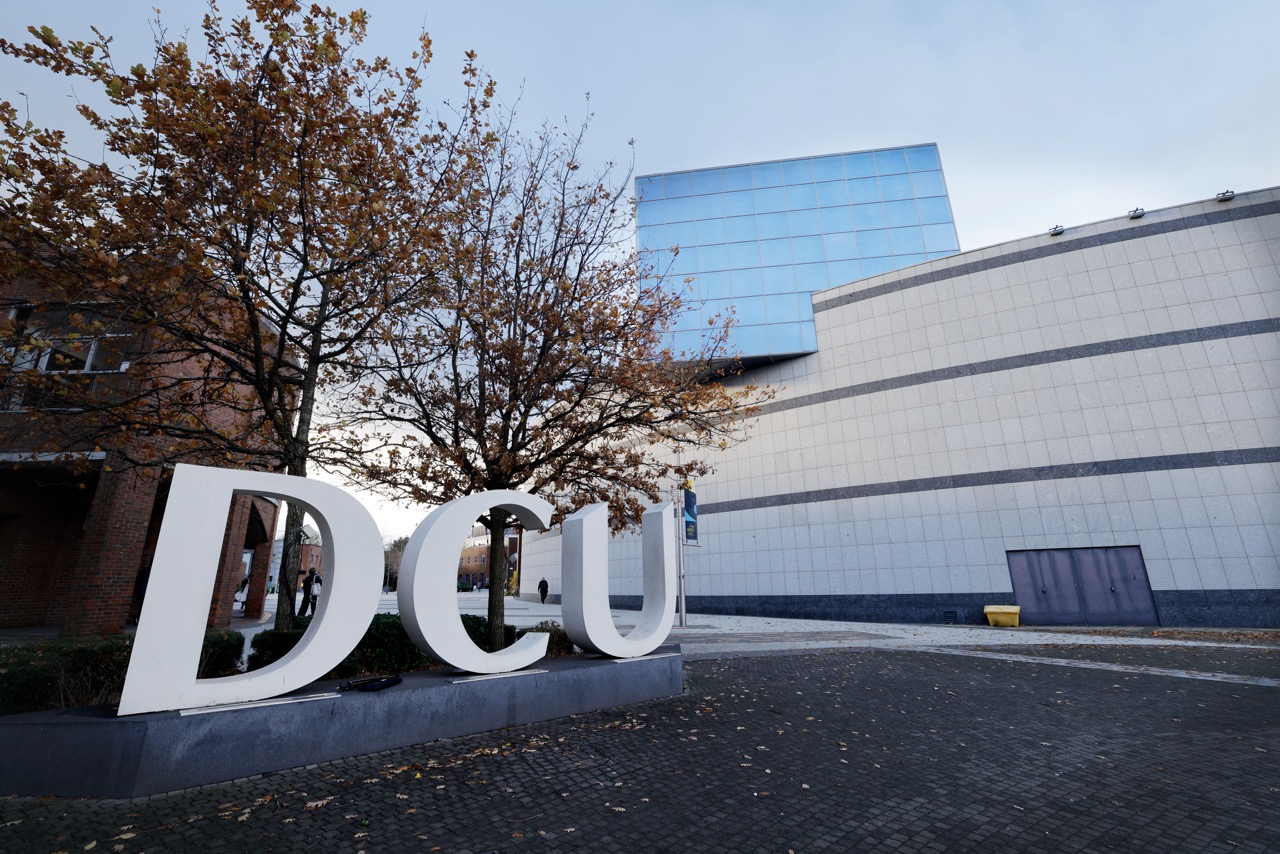
Dublin City University was established in 1980 and has developed a strong reputation for applied and industry-focused education. The university offers programmes across computing, engineering, business, communications and other fields.
DCU’s MSc in Computing is designed for students looking to develop advanced computing knowledge and practical skills. Some relevant technology and business programmes include:
MSc Computing
MSc Artificial Intelligence
MSc Business Analytics
MSc Finance
MSc Digital Marketing
MSc Management
MSc Global Management
DCU Business School holds AACSB, AMBA and EQUIS accreditation, placing it among the small group of business schools worldwide with all three accreditations.
Trinity vs DCU for Tech and Business
For technology, Trinity can be a strong option for students interested in specialised computer science areas and a research-led academic environment. DCU can appeal to students who prefer applied learning and industry-relevant skills, particularly across computing and technology.
For business, both universities offer a strong range of master's programmes. Trinity provides options across areas such as finance, management, marketing and business analytics, while DCU offers programmes in business analytics, finance, digital marketing and management.
Since both business schools have triple accreditation, the better choice should come down to the specific course, modules and career direction rather than accreditation alone.
Which University Should You Choose?
Trinity may be a better fit if university reputation, international recognition and specialised postgraduate options are important to you.
DCU may suit students who are looking for practical learning, industry relevance and strong options across computing and business.
Before making your decision, compare the course modules, entry requirements, tuition fees, scholarships and career opportunities for the specific programmes you are considering.
Final Thoughts
Trinity College Dublin and DCU both offer strong options for students planning a master’s in technology or business in Ireland. Trinity stands out for its international reputation and academic strengths, while DCU offers a more applied approach across many of its programmes.
The right choice ultimately depends on your academic background, preferred specialisation, budget and career plans.
At Onebounce, we help students compare universities and courses based on their profile and future goals, making it easier to choose the right path for studying in Ireland.
Start Preparing for English Tests
Get more details about the University
Get more details about the Course
Get Job Referrals to move abroad
Clarify doubts with our expert Counsellor for Free
Check your eligibility with our finance expert
Get latest udpates about the country
Write a winning SOP/LOR for your university
Enter your mobile number and get a callback from our counsellor.
Thank you! One of our counsellor will call you soon.
Oops! Something went wrong while submitting the form.

.avif)